M01self-initiated, not commissioned — built to explore the brief
1
Concept piece

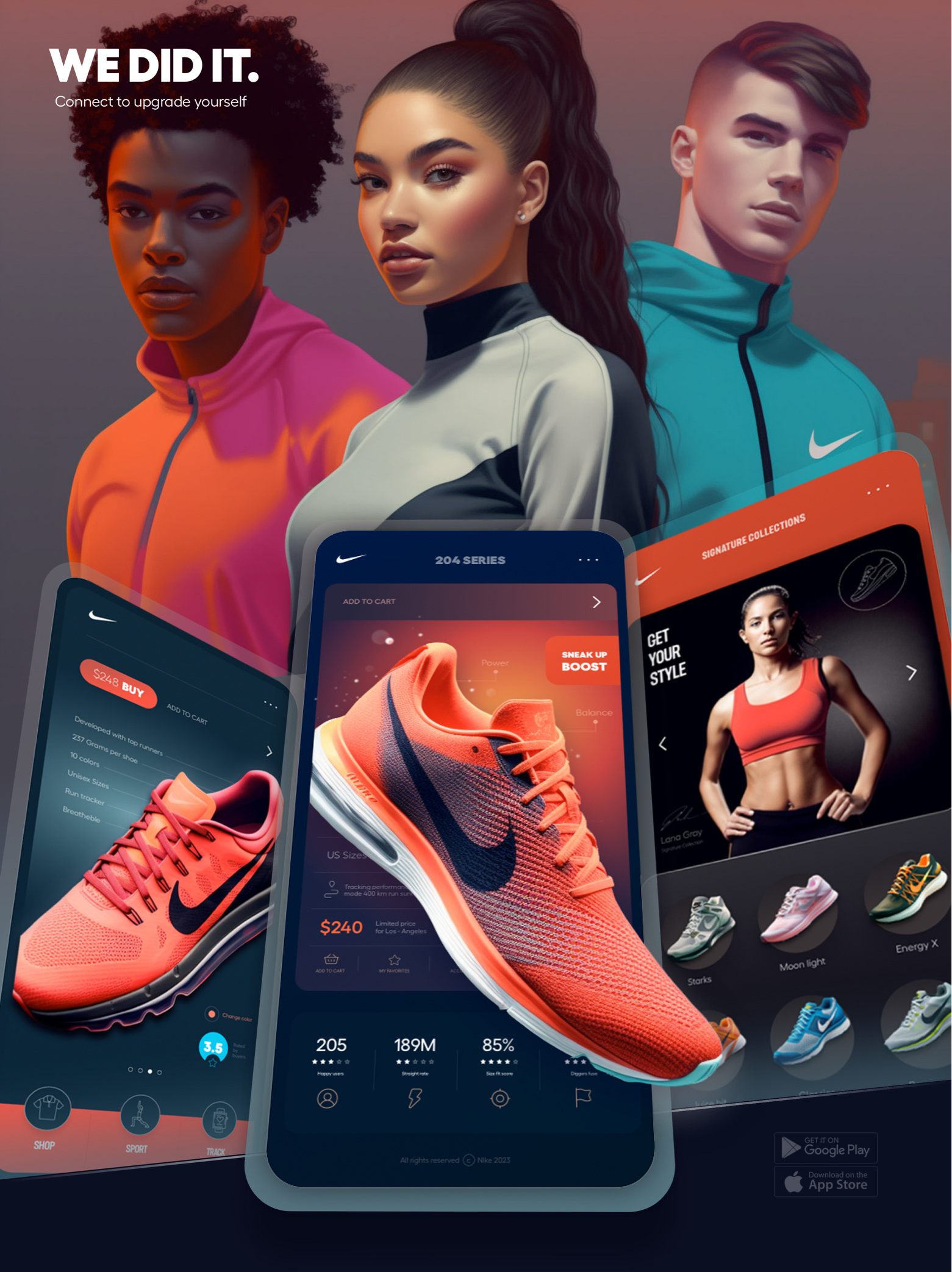
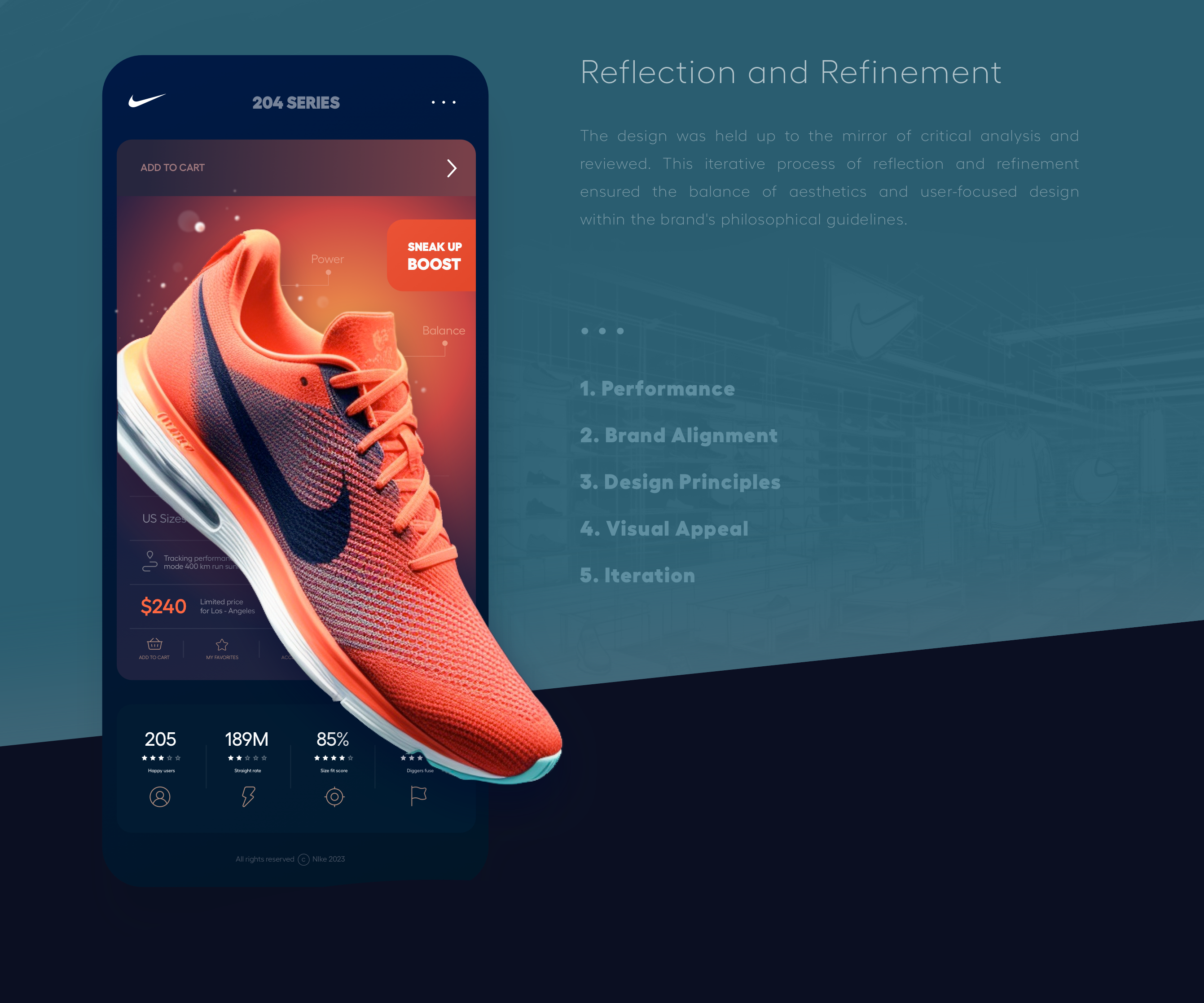
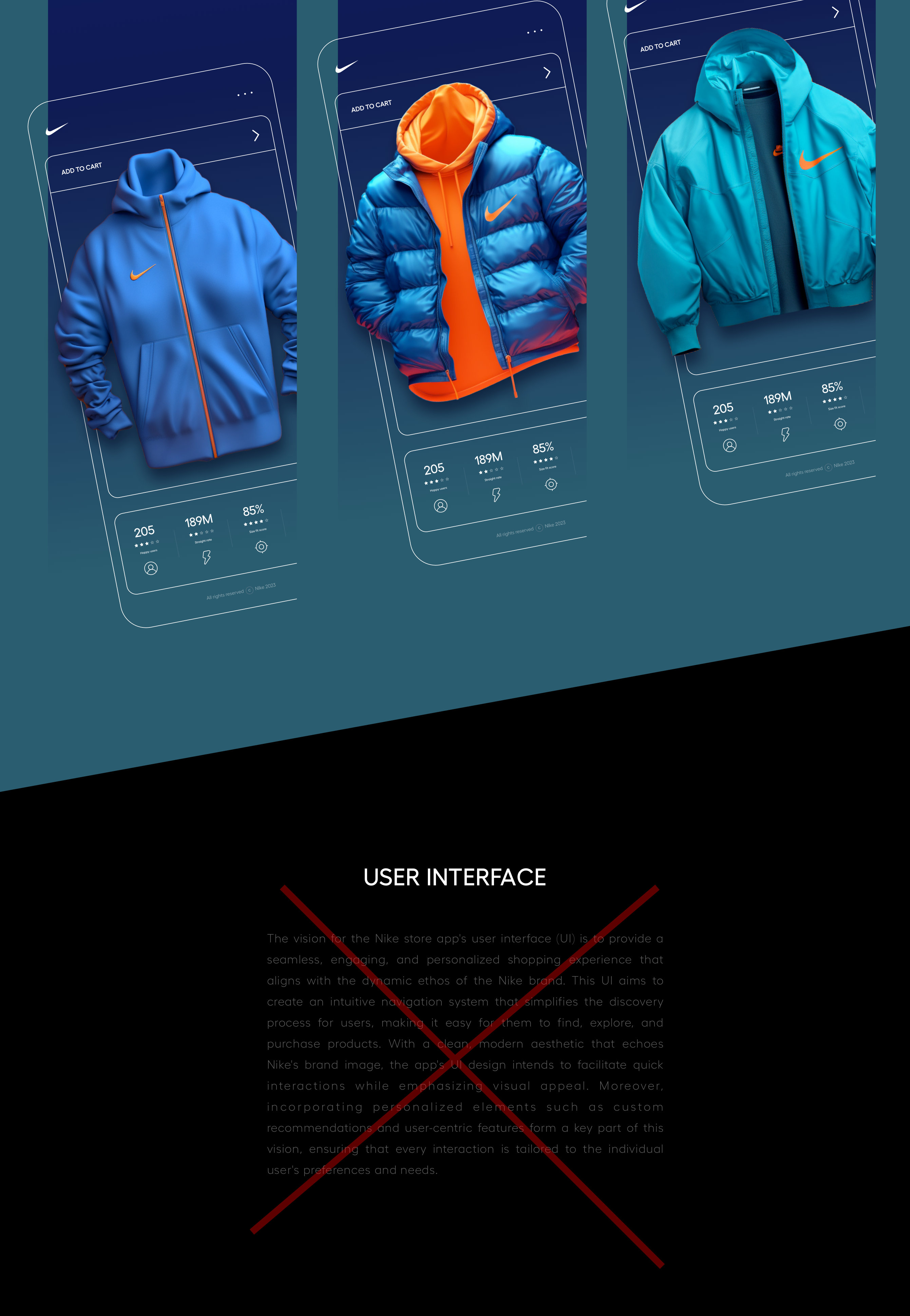
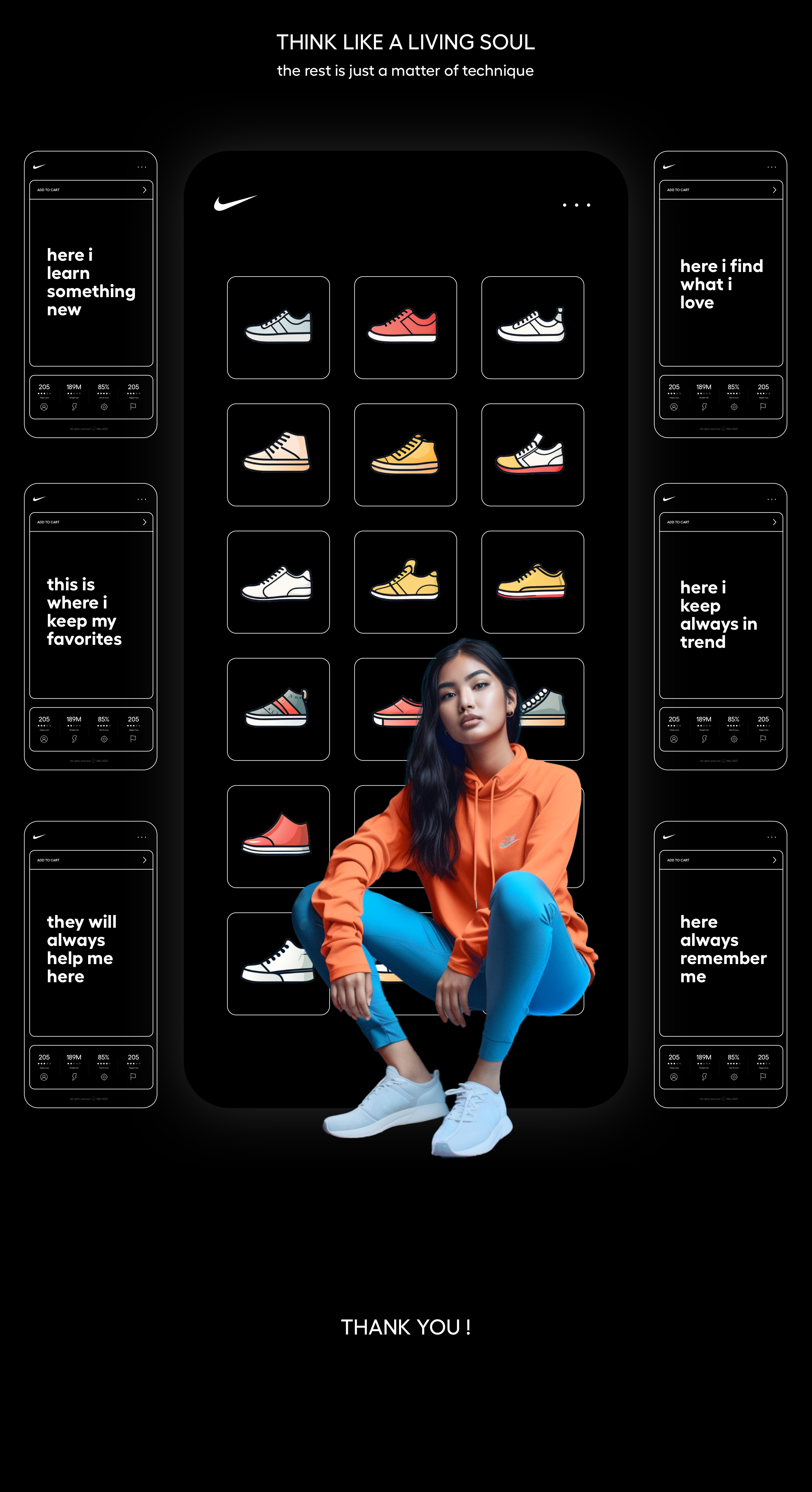
Nike's commerce surfaces are designed for scale, which is appropriate, and against this we wanted to ask a small question: what would a Nike storefront look like if it treated each sneaker as an editorial subject rather than as a SKU? The piece is self-initiated.
It is not affiliated with Nike, was never commissioned, and was published as a portfolio concept. The exercise was useful as a way to articulate the studio's position on commerce design — that the buy-box should be a consequence of the page, not its centre — and the concept has since attracted inbound from three sportswear brands looking for the same posture on their own digital surfaces. We treated the concept as a small but rigorous piece of work: real product information, a real type system, a real interaction model, and a motion language that we would defend in a production engagement. The intent was never to mimic Nike's brand — it was to demonstrate a posture toward commerce design that the segment is, on the whole, not pursuing.
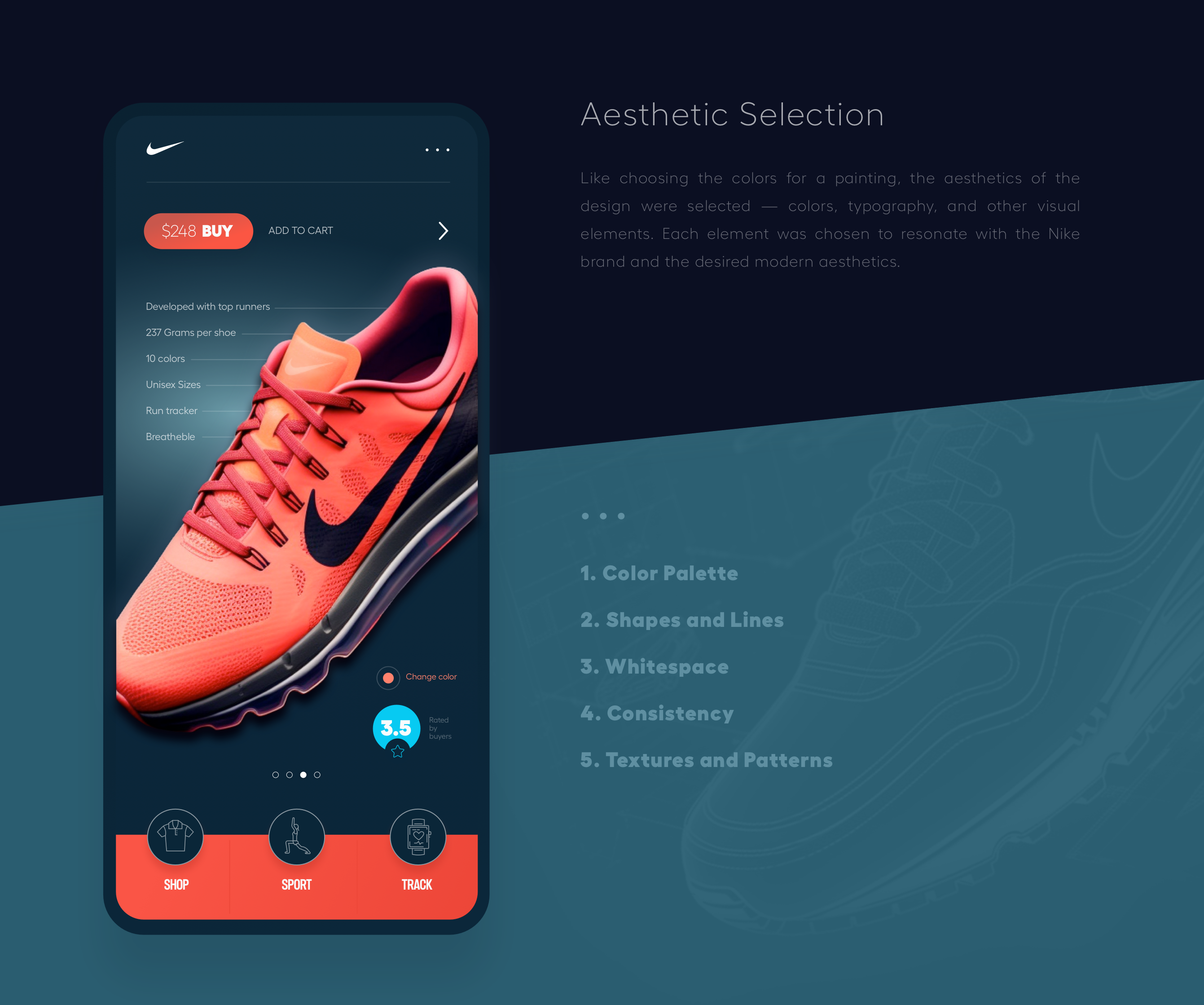
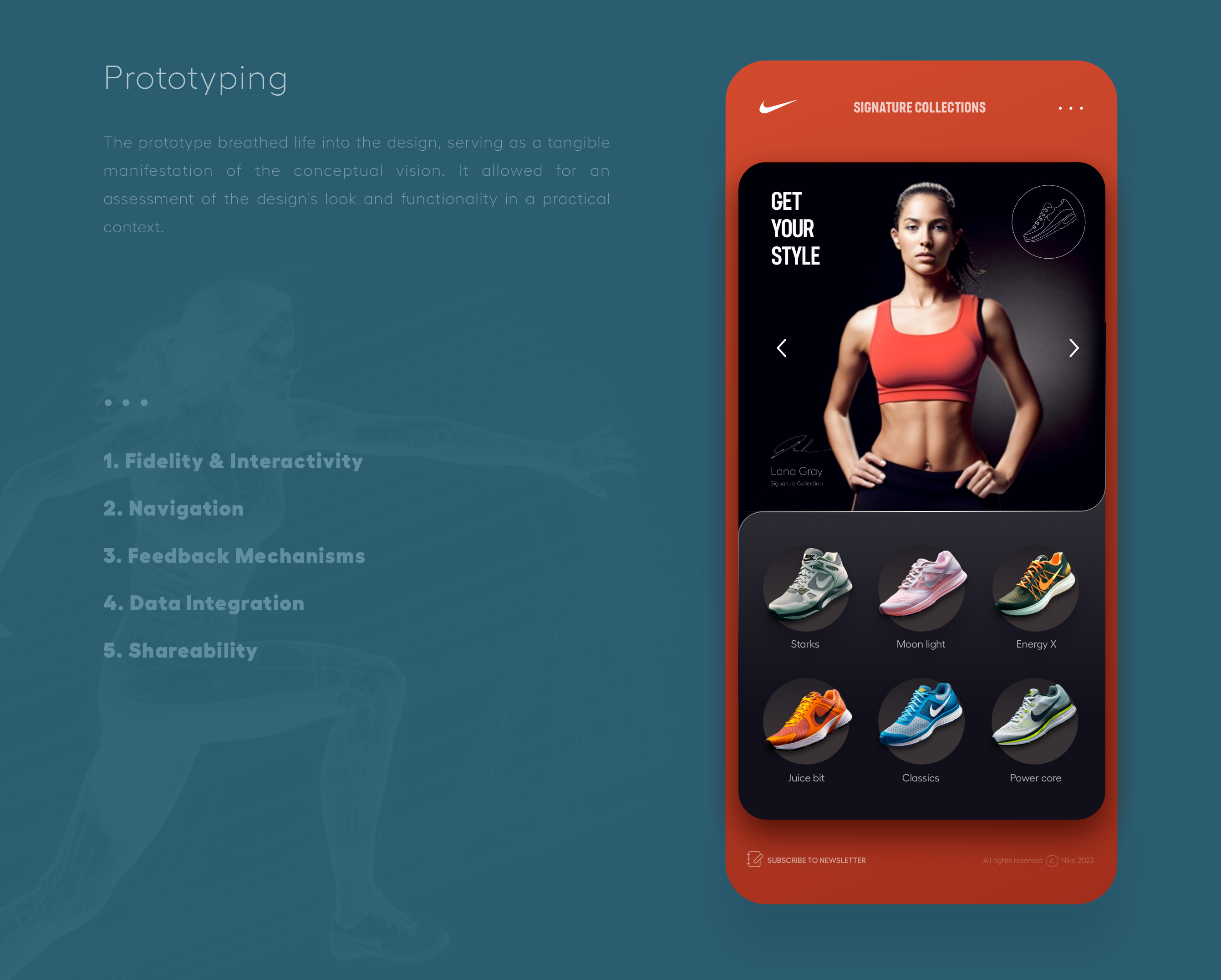
Each sneaker page is laid out as a single editorial spread, with a hero photograph, a long-form description, a controlled set of secondary images, and a quiet buy-box at the foot of the page. The information architecture refuses the commerce-page convention of putting the buy decision at the top, on the basis that the page itself is the argument for the purchase, not a wrapper around it.
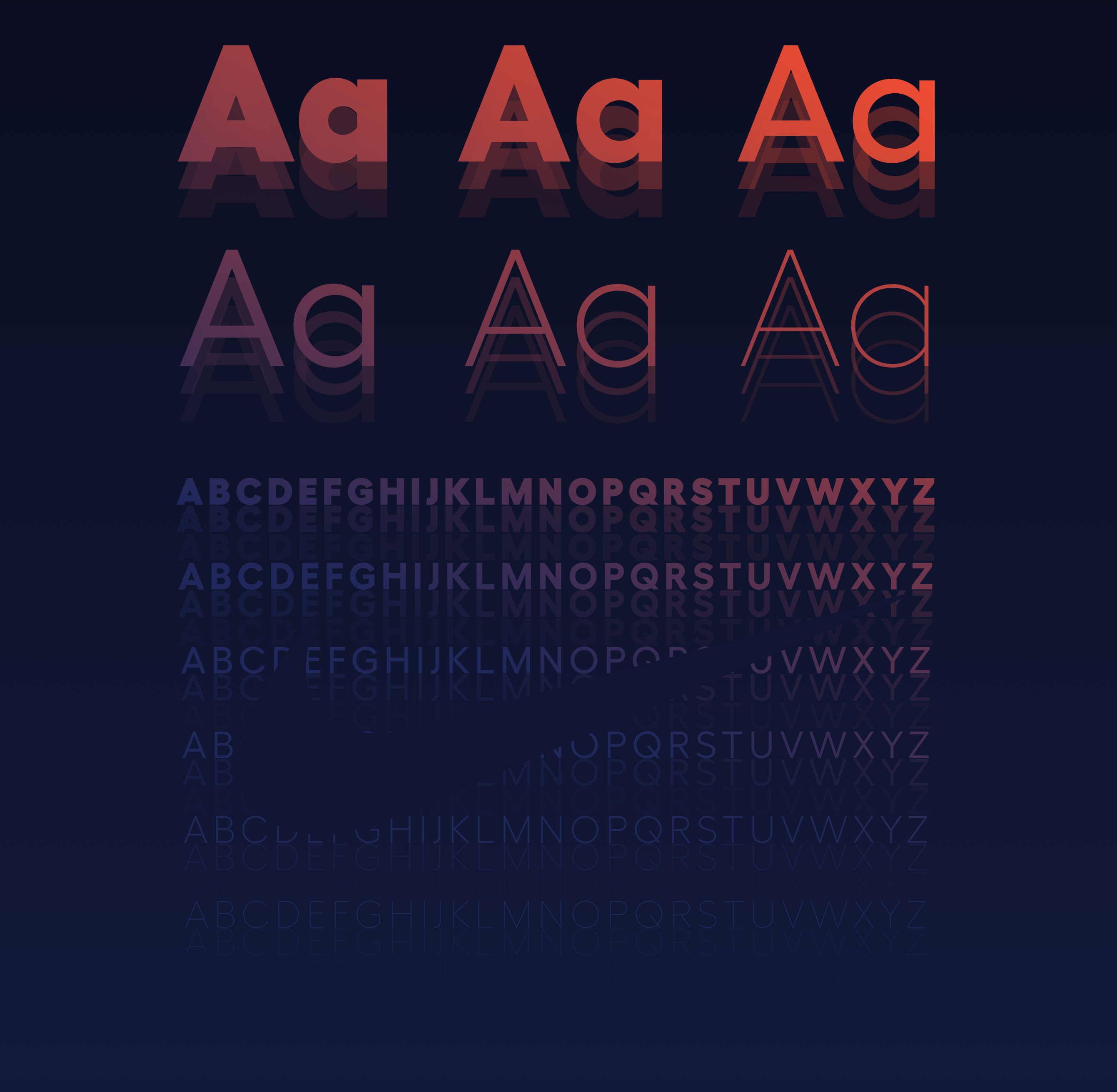
The concept uses a single serif and a single sans, with a small set of tightly defined sizes. The product names are typeset at editorial scale, the descriptions are typeset for reading rather than scanning, and the metadata is typeset in mono. The constraint forced every design decision to be made on rhythm rather than on novelty, which is the lesson the concept was designed to make explicit.
Every transition in the concept is anchored to a structural change in the page — never to decoration. The result is a piece that feels editorial in motion, not just in layout, and that demonstrates the difference between motion that informs and motion that ornaments.

Concept piece
Saves on editorial platforms
Inbound conversations
Send a short brief — we'll reply with concrete next steps. New engagements are limited each quarter.